

A fire can take a house, but it can’t take your future. Recovery is real, it happens around here every day, and after rebuilding many families come back to a home they love even more than the one they lost.
Our hearts are with the families in Indian Trail, Five Mile Prairie and across northwest Spokane who lost homes in the August 2026 Spokane Area Fires. If you’re in that group, there’s a section of immediate resources just below.
The road back has clear steps, and you don’t have to figure them out alone. Our team has helped families rebuild after wildfires, house fires, and other major losses across Spokane and North Idaho. We know how overwhelming the process can feel at the start, and we’ve seen the relief that comes when there’s a clear plan in place. Here’s what the rebuilding process usually looks like and how the right team can help.
Help for the August 2026 Spokane Area Fires
If you are in the first days after a fire and need shelter, insurance help, financial assistance or cleanup guidance, we keep a running list of verified local resources on our Spokane fire recovery page. It covers the emergency insurance order now in effect, temporary housing, the property tax deadline most people miss, and how to check out a contractor before you hire one.
This guide covers what comes after, when you are ready to rebuild.
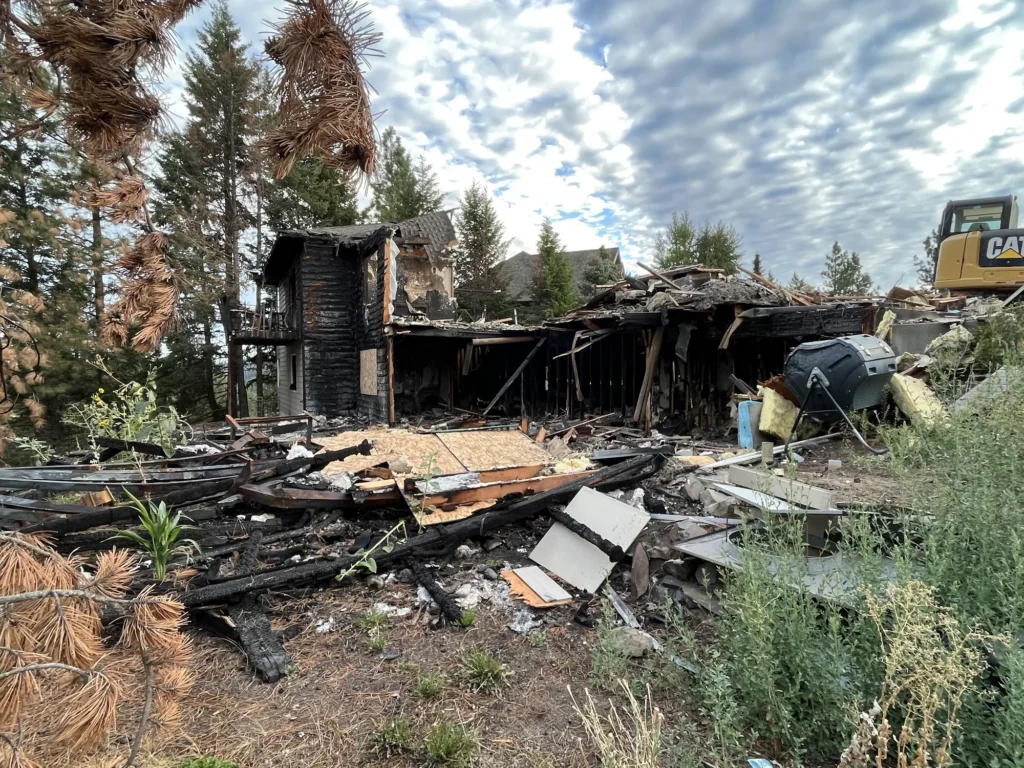
Take the first steps with confidence
The first moves are simple, and each one puts you back in control. Once fire officials say the property is safe to approach, your first calls are usually to your insurance company to open a claim, and to line up a comfortable place to stay while you plan.
Start a simple record of the loss with photos, video, and a running list of what was in the home, and keep receipts for lodging, meals, and the basics. Most policies help cover those costs, and good records make everything that follows easier.
Lean on your insurance coverage
Your homeowner policy is there for exactly this moment, and understanding it early turns an overwhelming unknown into a plan you can follow.
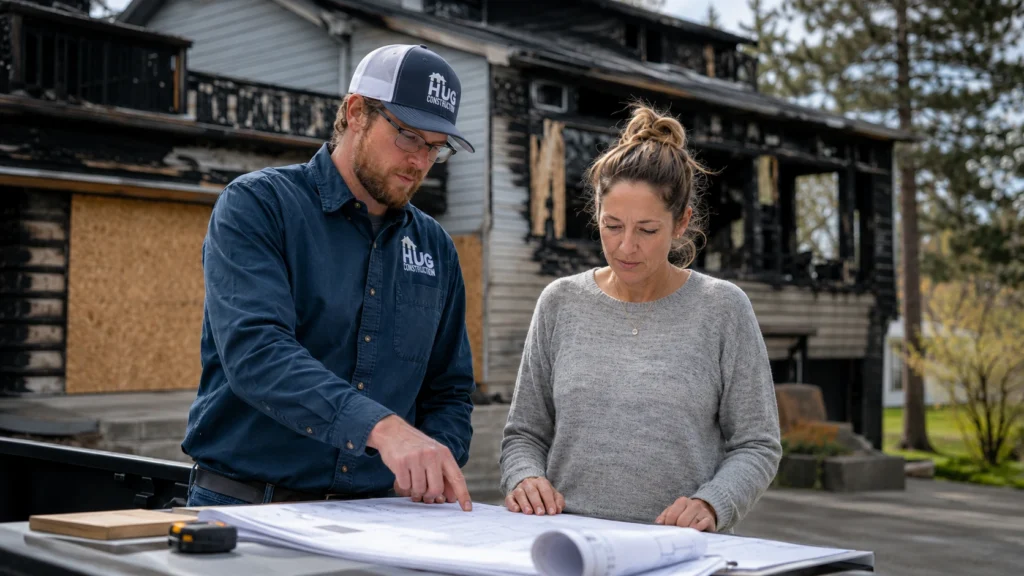
Most policies have three parts: dwelling coverage for the structure, personal property coverage for your belongings, and additional living expenses (often called ALE) for the cost of living somewhere else while you rebuild. Check whether your dwelling coverage is replacement cost or actual cash value, since that changes how much of the rebuild is covered. Work closely with your adjuster, keep written notes of your conversations, and take the time you need to feel good about the numbers. The Washington State Office of the Insurance Commissioner offers free help understanding your policy, and they can step in if a claim isn’t being handled fairly.
The practical rule
Find your dwelling limit and your ALE limit early. Those two numbers shape your rebuild budget and your timeline more than anything else, and once you know them, you can make decisions with more confidence.
Clear the way for a fresh start
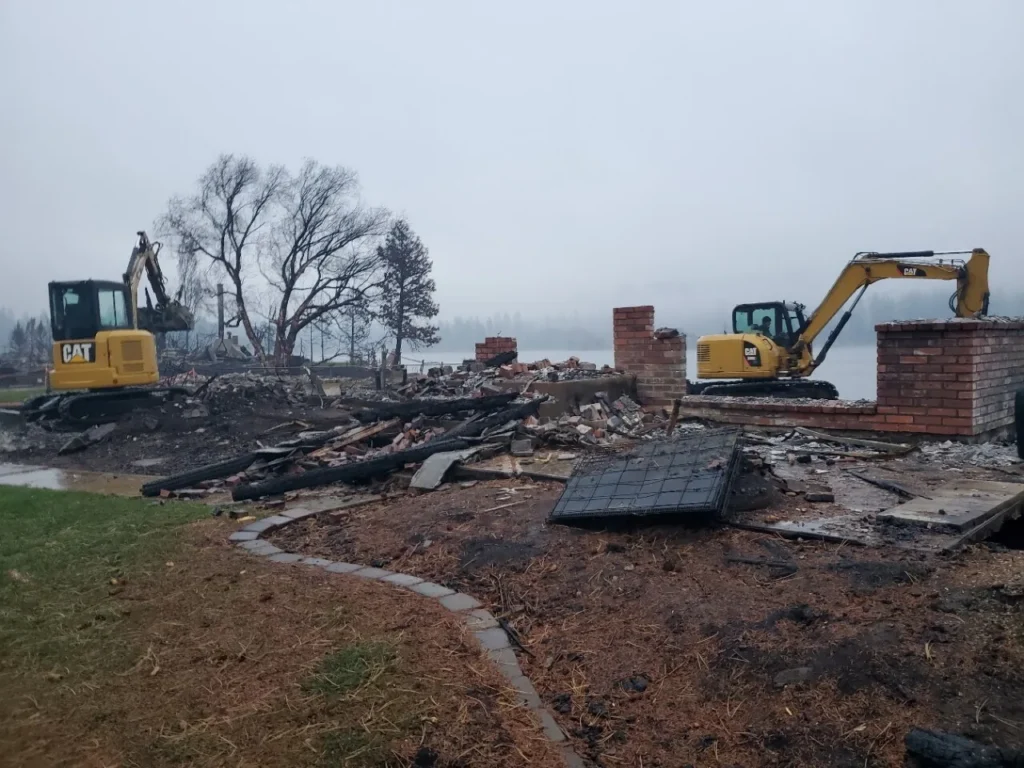
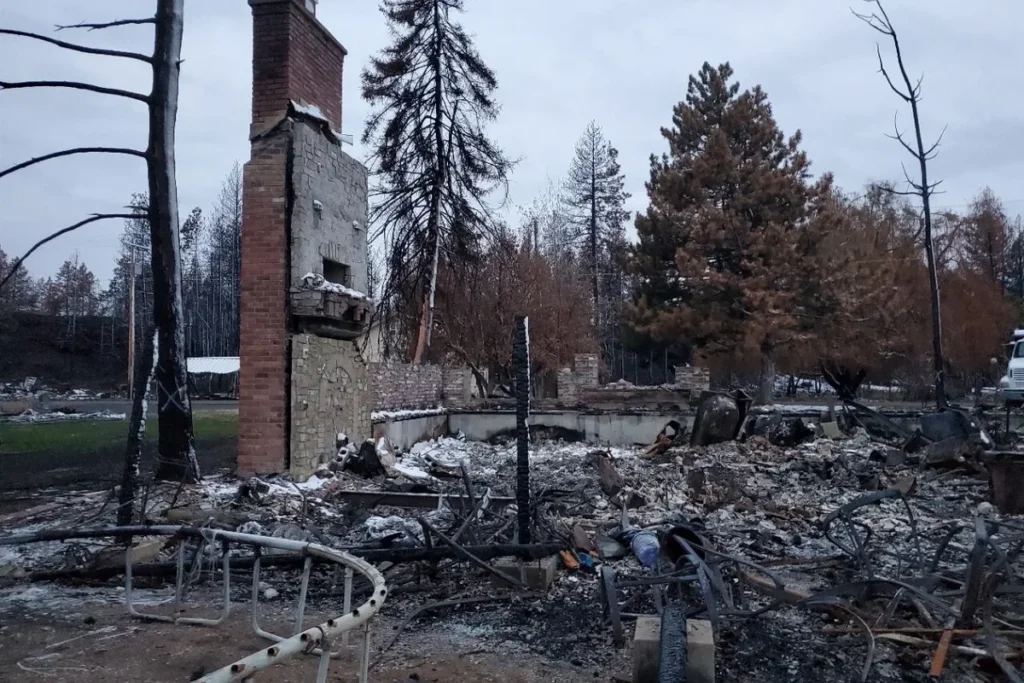
Before the new home goes up, the site gets a careful, professional cleanup, and this is where the momentum really starts.
Ash and debris from a burned home need experienced hands, because structural ash can hold material that ordinary yard waste never would. This is one of the places we make recovery easier. We work with two restoration partners, Compass Construction and Capstone Construction, whose crews handle cleanup, mitigation and restoration, so the site gets made safe and ready and the work can move smoothly into the rebuild. Washington also has a helpful statewide resource, After the Fire Washington, that walks homeowners through debris removal. If your home is on a well, plan to have the water tested as part of that step.
Two things are worth doing before anyone starts clearing. Ask your insurer whether they need to inspect the site first, because some policies require it and cleaning too early can cost you reimbursement on work you’ve already paid for. And if the home was built before 1980, have it tested for asbestos before debris gets disturbed. Asbestos doesn’t burn, so it ends up in the ash, and Spokane Regional Clean Air sets the local rules for testing, removal and disposal. Your contractor should be handling both of these conversations, not leaving them to you.
If your house didn’t burn but the smoke got in
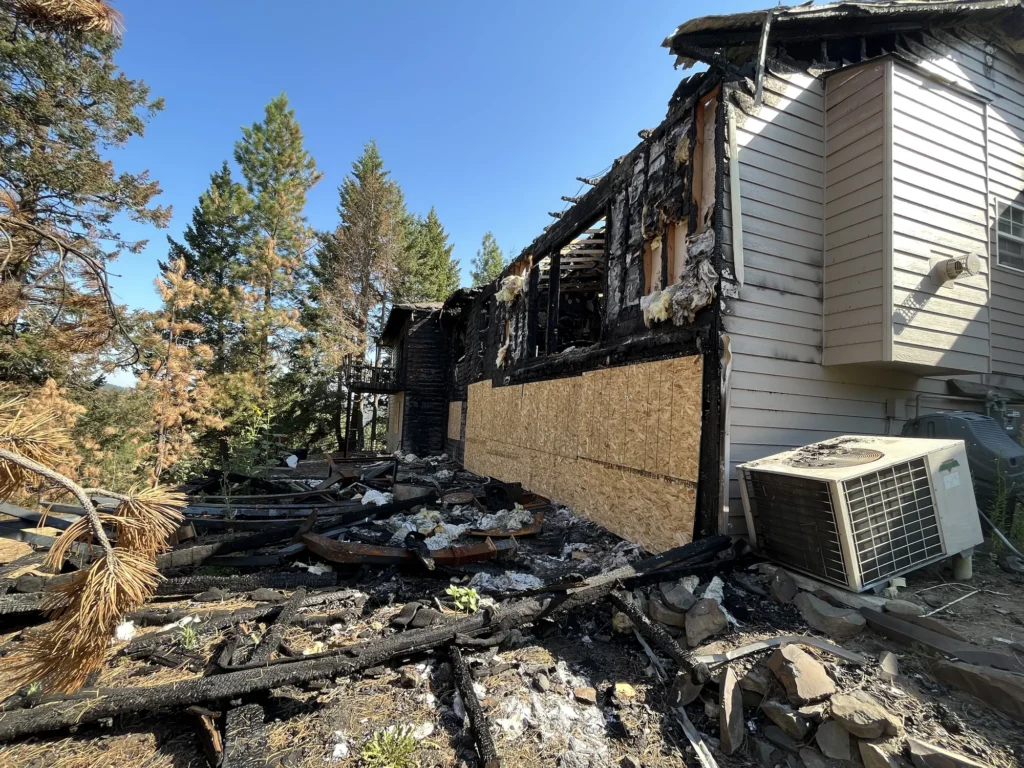
Far more homes come out of a fire like this smoke-damaged than burned, and that damage is easy to underestimate because the house looks fine from the curb.
Smoke and fine ash work their way into insulation, ductwork, carpet padding and the cavities behind drywall. The smell is the obvious symptom, but the residue is acidic and it keeps working on metal, finishes and electronics after the fire is out. Structural ash is also more toxic than ash from burned brush, because it carries whatever the building was made of. Check your HVAC system before you turn it on, and plan on replacing filters monthly until the smell is gone.
If you do clean up yourself, wear an N95, gloves and something disposable over your clothes, and don’t dry-sweep ash. Misting it and wiping with a damp cloth keeps it out of the air. Skip ozone generators and air fresheners, which add their own problem instead of fixing this one. Anyone pregnant, over 65, or dealing with asthma or a heart condition shouldn’t be doing this work at all. Washington’s Department of Health has a thorough post-fire cleanup guide worth reading before you start.
Either way, treat it as an insurance claim rather than a deep clean. Photograph everything before anyone touches it, including the exterior and the attic if you can get up there safely. Our partners Compass Construction and Capstone Construction handle smoke and soot mitigation along with structural fire restoration, and an honest assessment early is a lot cheaper than finding the problem eight months later.
Partner with the city or county
Every rebuild goes through local permitting, and that actually works in your favor. It brings the new home up to current building codes and leaves a clear record of good work. After big fires, local governments often move fast to help. Spokane County has prioritized permits for fire victims, cut demolition fees, and aimed for quick turnaround on rebuilds that keep a similar footprint. A good place to start is the Spokane County Building and Planning Department. In North Idaho, your local city or county building department can point you to what applies to your property.
A builder who knows the local process can put together the site plan, pull the permits, and keep things moving, so you’re not managing the paperwork on your own.
One team, one plan
The smoothest rebuilds possible happen when one team is coordinating the insurance, the site, the permits, and the construction together.
That’s how we work, right alongside our restoration partners Compass Construction and Capstone Construction, so cleanup and rebuilding move as one effort instead of a string of handoffs. It also helps to look at the timeline honestly. Between the claim, cleanup, design, permitting, and construction, a full rebuild usually takes about a year, sometimes a bit more. Knowing that up front lets you settle in, keep an eye on any time limits on your ALE coverage, and make good decisions without feeling rushed.
A few smart upgrades can really lower a home’s risk: fire resistant roofing and siding, ember resistant vents, tempered glass, and good defensible space around the structure. A lot of these choices also help with insurance in higher risk areas. The IBHS Wildfire Prepared Home program lays out proven, science based steps worth looking at as you plan.
Work with a team that has done this before
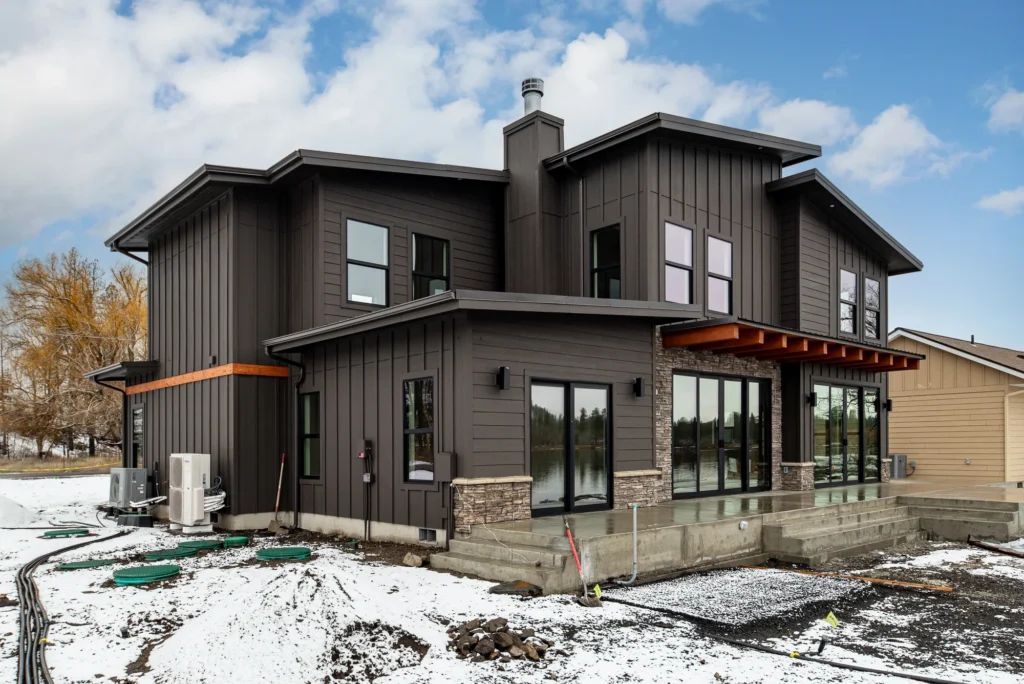
Rebuilding after a fire isn’t a typical project, and having done it before brings real peace of mind. Our team has rebuilt homes after the Gray Fire and finished house fire projects around Spokane and North Idaho, and together with our restoration partners Compass Construction and Capstone Construction we cover the whole path from restoration to a finished home. KREM 2 also featured us in their story on families getting back home after the Gray Fire. Being trusted to help these families is something we’re grateful to be a part of.
A fire rebuild checklist
Here’s a starting point as you work through it:
- Make sure the property is safe to enter before you go near the structure.
- Call your insurance company and open a claim.
- Line up temporary housing, and ask your insurer about additional living expenses (ALE).
- Document the loss with photos, video, and a written inventory, and keep your receipts.
- Ask your insurer whether they need to inspect the site before cleanup starts, and test for asbestos before debris is disturbed.
- Arrange professional debris removal and restoration.
- Test your water if the home is on a well.
- Get a demolition permit and put together a site plan.
- File your destroyed property claim and tax exemption form with the county assessor before construction begins.
- Check current building codes and any updated requirements.
- Pick a builder experienced with fire rebuilds and insurance coordination.
- If the house survived, have smoke and soot damage assessed before you run the HVAC.
- Plan for a realistic timeline, often about a year.
- Think about fire resilient materials and defensible space for the new build.
Come back better with one conversation
If you or someone you know lost a home to fire, we’re here to help make the path forward clear and hopeful. Hug Construction has rebuilt after the Gray Fire and handled house fire projects across Spokane and North Idaho, and with our restoration partners Compass Construction and Capstone Construction we can coordinate restoration, insurance, permitting, and the rebuild from start to finish.
You don’t need to have it all figured out to reach out. A short conversation about your property is enough to get started.
If you’ve just lost a home, you don’t need to be thinking about contractors yet. Take care of the immediate things. Get a claim number. Find somewhere to sleep. When you’re ready, we’re here, and there’s no rush on our end. A phone call costs nothing and you don’t need to have anything figured out first.